Hallway Flooring That Survives Real Life: Specifying the Toughest Three Square Metres in the House
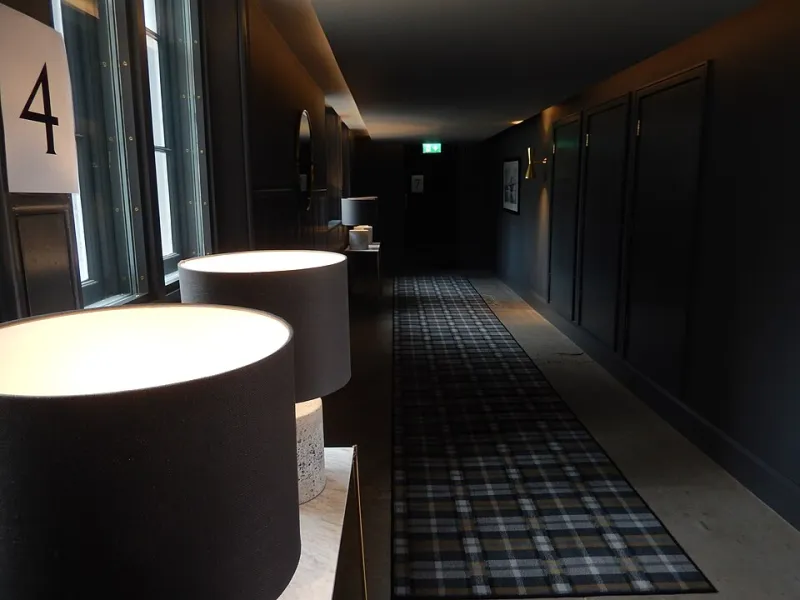
Photo: AlasdairW, CC BY-SA 4.0, via Wikimedia Commons
Walk into most UK homes and the hallway has had the least thought and the most use. It takes the postman, the dog, the school run, the Christmas tree, the bike, the muddy wellies and every trip from the kitchen to the stairs. It is also usually the smallest floor in the house, which makes the decision feel low-stakes right up until it starts looking shabby eleven months later.
We fit a lot of hallways, and the pattern is remarkably consistent. The floor that fails is rarely the one that was too cheap — it is the one that was chosen for the wrong reasons. So here is the hallway-specific version of the conversation, rather than the showroom one.
Why a hallway is a different job to a living room
Three square metres of hallway can take more foot traffic than thirty square metres of lounge. Everything that comes in from outside lands there first, and most of it is abrasive. Grit and road salt behave like sandpaper under a shoe; a single winter of it will dull a soft finish that would have survived a decade in a bedroom.
Then add the variables nobody puts on a sample card: a door that swings across the floor, a porch that traps damp air, a radiator that dries one patch and leaves the rest cold, and very often no natural light to disguise the dust. Hallways are a genuinely harsh environment. Treat them like one.
The mat does more work than the floor
Before you spend a penny on planks or tiles, sort out the matting. A small 60cm mat by the door is decoration, not protection — people take two or three steps before they stop, so a metre and a half of dirt-trapping matting is where the real saving is. A scraper mat outside and an absorbent one inside is the ideal combination, and a recessed matwell is the neatest solution if you are renovating anyway.
One warning from experience: rubber-backed mats left on wood or LVT can trap moisture and mark the finish. Lift them periodically and let the floor breathe.
LVT: usually the sensible answer
Luxury vinyl tile has become the default hallway choice for good reason. It shrugs off damp shoes, it does not care about splashes, and it is comfortable underfoot in a way porcelain is not.
The number that matters is the wear layer. In a hallway, look for 0.55mm and above. The 0.3mm products on the market are fine for a spare bedroom, but they will show traffic patterns at the front door within a couple of years. Glue-down LVT handles point loads — bike stands, heavy plant pots, the corner of a pram — better than a floating click system, and a rigid core helps where the original floor is not perfectly flat.
Check slip resistance too. R10 is a reasonable baseline for a hallway, and worth going up to R11 if the door opens straight onto the outside and the floor regularly gets wet.
Engineered wood: character, with a caveat
Engineered oak in a hallway looks fantastic and is far more stable than solid timber, because the plywood core copes with humidity swings that would cup a solid board. The caveat is the wear layer on top: around 3–4mm if you want the option to sand and refinish later, and a factory lacquer or hardwax oil finish rather than something delicate.
The weak point is the door zone. That is where wet shoes sit, where the damp comes in, and where the finish wears first. Matting and a threshold that keeps the weather outside will add years. Skip both and you will be looking at a refinish far sooner than you would like.
Laminate: honest about its limits
Laminate is the budget-friendly option and it can work well, provided you buy on abrasion rating rather than price alone. AC4 is the sensible minimum for a hallway; AC5 if the house is busy. An AC3 board at the front door is asking for trouble.
The real vulnerability is moisture at the joints. Wet shoes, a leaking porch, a mop that is too wet — all of it swells the core and there is no repairing that. It also moves, so expect the odd squeak over time.
Tile: the forever option, with a grout compromise
Porcelain is the hardest-wearing thing you can put down and it will still be there when the kitchen has been replaced twice. Choose a textured or matt finish at R10 or R11 — polished tiles in a hallway are a genuine slip hazard the moment someone walks in from the rain.
The trade-off is grout. Wide grout lines in a hall collect grit and go grey quickly. Narrow joints and an epoxy or quality cementitious grout make a real difference to how long it stays looking clean. Tiles are also cold, so if the hallway sits over a suspended timber floor, factor in whether you want underfloor heating before, not after.
The details that decide how it looks in a year
- Thresholds and door clearance. New floor plus underlay has to fit under the existing doors, or the doors need trimming. Sort this before the adhesive goes down.
- Subfloor prep. Grit gets into every hollow. A floor laid over an uneven base will flex, squeak and eventually fail at the joints.
- Expansion gaps. Wood and laminate need them at the perimeter, hidden under skirting or beading. Tiles need movement joints in larger runs.
- Sealing the edges. In a hallway, sealing where the floor meets the doorstep or a draughty threshold stops damp creeping under the finish.
- A winter routine. A quick sweep and a damp (not wet) mop through the grit season is worth more than any product on the shelf.
Get those right and the surface choice becomes a question of taste rather than damage control. Get them wrong and even a premium floor will look tired by the time the clocks go back.
If you are weighing up options for a hallway in your home, our team at Flooring WM Ltd is always happy to talk through what will actually survive your front door.