Claws, Dribble and Wet Wellies: A No-Nonsense Dog-Flooring Shortlist for UK Homes
Photo: muddy dog paws on wooden hallway floor in british home, via slimages.macysassets.com
Every flooring conversation that starts with "we've got a Labrador" ends in the same place: a compromise. There is no floor that is scratch-proof, slip-proof, warm, quiet, cheap and beautiful all at once. What there is, is a shortlist of materials that each fail in a predictable way — and once you know how something fails, choosing between them gets a lot easier.
What a dog actually does to a floor
Four separate mechanisms, and they are often confused:
Abrasion. Claws, and more importantly the grit carried in on paws, act like sandpaper on the traffic lane. This is the one that kills cheap laminate.
Point loading. A big dog skidding into a turn puts a surprising amount of pressure through four small contact points. Soft cores dent; hard surfaces do not.
Liquid. Water bowls, accidents, and the drip trail from a wet coat. It is not usually the puddle that causes damage — it is the liquid sitting in a joint overnight.
Slip. A hard, glossy floor plus a dog in a hurry plus a hallway corner is a genuine welfare issue, not just a scuff mark. Older dogs especially need grip underfoot.
Sort those four, and the rest is aesthetics.
The shortlist, honestly assessed
Luxury vinyl tile
The default recommendation for most dog-owning households, and deservedly so. A wear layer of 0.55mm or better takes serious punishment, glue-down installation stops planks shifting, and the surface wipes clean in seconds. Choose R10 or R11 slip rating for hallways and kitchens.
Where it falls down: claws do eventually leave fine surface marks on any LVT — matte, textured finishes hide them far better than gloss. Very heavy dogs on a soft underlay can also telegraph dents. Do not use click LVT in a boot room or anywhere standing water sits; the joints are the weak point.
Porcelain tile
Effectively immune to claws and dents, and it will not care about a water bowl spill. Plank-effect porcelain gives you a passable timber look with none of the anxiety, and the grout can be sealed or specified as an epoxy for easy cleaning.
Where it falls down: it is cold, hard underfoot, unforgiving if a dog careers into a doorway, and genuinely slippery when wet unless you pick a textured finish. Grout lines collect mud. Also, it needs a rock-solid substrate — deflection cracks tiles, and that is an expensive lesson.
Engineered wood
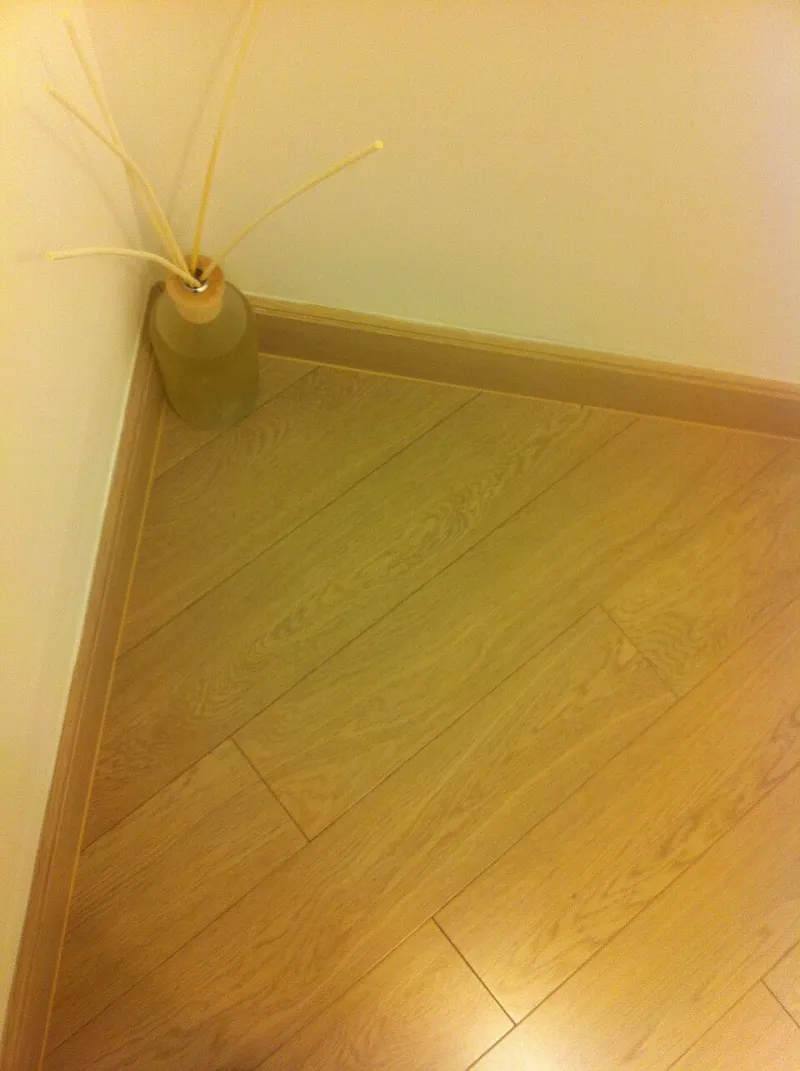
This is where the renovation-minded buyer wants to end up, and it is achievable. A brushed oak with a hardwax oil finish is the most dog-tolerant timber option: the texture breaks up light scratches, and oiled boards can be spot-repaired and re-oiled rather than sanded back to bare wood.
Where it falls down: dents, urine stains and water at joints. A dog with a weak bladder and an engineered floor is a difficult combination, and no finish changes that. Best kept for living rooms and bedrooms where the dog sleeps rather than charges about.
Laminate
Laminate divides opinion, and rightly. A good AC4 or AC5 rated board with a water-resistant core and tight, well-sealed joints will handle a small dog in a living room perfectly well at a sensible price.
Where it falls down: budget laminate, and badly fitted laminate. Thin wear layers go through in traffic lanes within a couple of years, and once water gets into a core it swells and never comes back. If the dog is large, boisterous, or prone to accidents, this is the option to skip.
Rubber
Not glamorous, but superb in the right place. Studded or smooth rubber is warm-ish, quiet, grippy even when wet, and utterly indifferent to mud. It is the sensible choice for a boot room, utility, dog shower or kennel area.
Where it falls down: it looks like a gym in a living room, it marks from some rubber-soled items, and certain oils stain it. Use it where function beats style.
Room by room
Hallway. The hardest-working floor in the house. Glue-down LVT with a matte finish, or textured porcelain if you want stone-effect. An absorbent mat inside and a coir mat outside does more for your floor than upgrading the material.
Kitchen. LVT or porcelain. Add a mat in front of the sink and the dog bowl; water and kibble both end up there.
Utility or boot room. Rubber or porcelain, with a low threshold and a drain if you are being serious about it.
Living room. This is where engineered oak earns its keep if you want the renovation look. If the dog is left alone here for long stretches, LVT is the safer bet.
Stairs. Carpet for grip, or an LVT with a properly nosings-fixed trim. Bare varnished treads and a running dog are a bad combination.
Bedrooms. Engineered or a good quality carpet. The dog is usually asleep here rather than doing laps.
Finishes and underlays that make cleaning easier
Matte and low-sheen surfaces hide scratches and paw prints; gloss shows everything. Brushed, wire-brushed and lightly textured finishes are your friend for exactly the same reason. Keep bevels tight — wide V-grooves in a laminate or engineered board are little mud traps that need a brush rather than a mop.
Underlay is where people over-specify and under-think. A thick, squashy underlay under laminate or engineered board feels nice for a week and then lets the joints flex and click; use a firm, purpose-made acoustic underlay instead. For glue-down LVT, the subfloor prep matters more than the underlay ever will — a self-levelling compound is not a luxury, it is the difference between a floor that stays put and one that peels at the edges.
Grout colour is a small decision with a big daily impact. Mid-greys and warm neutrals forgive mud; brilliant white grout in a boot room is a commitment to scrubbing.
The cleaning kit that actually works
A microfibre dry mop for grit, a pH-neutral cleaner rather than a harsh detergent, a rubber squeegee for wet paw days, and a stack of old towels by the back door. Muddy paw prints are a two-minute job on a sealed, matte, joint-tight floor — and a twenty-minute job on the wrong one.
Choose for how your dog actually behaves, not how you hope it will, and you will still like your floor in five years.