A Greenhouse With a Sofa: Specifying a Conservatory Floor for All Four Seasons

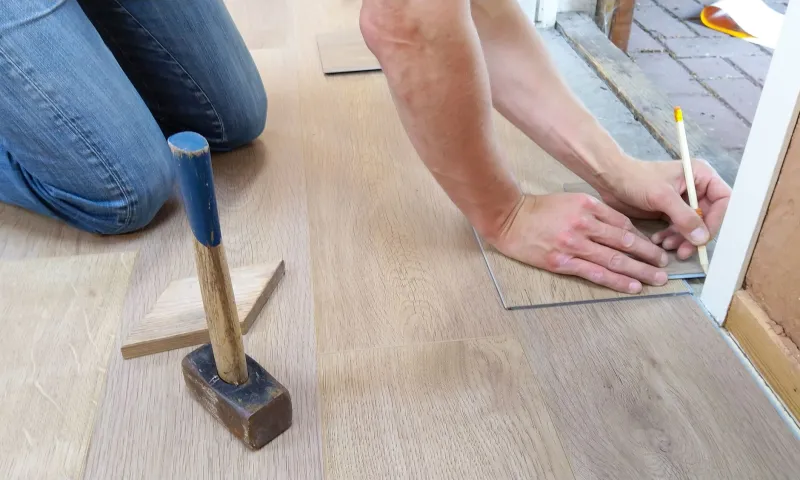
Photo: WelshDave, CC BY-SA 4.0, via Wikimedia Commons
A conservatory is a lovely idea until you look at it like a floor fitter. In summer it is a greenhouse. In winter it is a cold frame with a sofa in it. The floor sits between those extremes, expanding and contracting, drying out and taking on moisture, while UV light pours through the glass and condensation quietly gathers near the frames. Most conservatory flooring failures are not simply a case of choosing the wrong material. They are a case of specifying and fitting a reasonable material as though it were going into a normal living room.
Start With the Swing, Not the Swatch
Before anyone opens a sample book, work out how the room is actually used. Is it a year-round extension of the kitchen, heated and occupied in January? Or is it a three-season room where the doors are thrown open in May and the radiator stays off until October? Does it face south and bake from midday? Are there blinds, or is the sofa fading as we speak? Is the conservatory open to the house through wide doors, or separated by a draughty pair of French doors?
Those answers matter more than the colour of the oak. A floor in a conservatory has to cope with a wider temperature and humidity swing than almost anywhere else in a UK home. The material needs to be dimensionally stable, the fitting needs to allow for movement, and the room needs some way of managing moisture and sun. Get those three things right and most materials will behave. Get them wrong and even a good product will cup, gap, lift or fade.
The Realistic Shortlist
Engineered wood is the sensible wood option. A multi-layer plywood core is far more stable than a solid board, and it gives you real timber on top. It still does not like standing water or relentless sun, and it will move with humidity. Choose a reputable engineered board, not a thin veneer over a soft core, and expect to control the room a little: blinds in summer, sensible heating in winter, and no mopping that leaves puddles round the edges.
LVT is popular for good reason. Good quality luxury vinyl is stable, water-resistant and warm underfoot. Glue-down LVT is generally the more reliable choice in a conservatory because it is held firmly across the floor and copes better with temperature changes than a loose-laid click floor. Cheap LVT can fade under strong UV, so ask about light stability rather than assuming all vinyl is equal. Also check the wear layer: a conservatory often has garden doors and a lot of traffic.
Tile is the most stable of the lot. Porcelain or ceramic will not care much about UV or humidity, and it is easy to clean. The catch is comfort and fitting. Tile is cold underfoot, grout needs maintaining, and the floor structure and adhesive have to be right. A conservatory slab can move thermally, so flexible adhesive and proper movement joints matter. Do not let anyone tile it like a small bathroom and hope for the best.
Laminate can work on a budget, but it is the option that needs the most honesty. Modern moisture-resistant cores are better than they used to be, but laminate is still a wood-based product and swelling at the edges is hard to undo. In a conservatory that gets damp or has a lot of direct sun, it is a compromise. If you go down this route, choose a good AC4 or AC5 rating, leave the specified expansion gap, and accept that it is not the forever floor.
What UV Does When You Are Not Looking
Sun damage is slow and sneaky. It shows up as a faded patch where the rug used to be, a yellowed edge near the glass, or a colour that looks tired after two summers. Wood darkens or lightens depending on species and finish. Vinyl can fade or discolour. Laminate can shift in tone. Tile is largely untroubled.
Blinds are the simplest defence, especially on south and west-facing glass. If the conservatory is a sun trap, think about solar control rather than relying on a thin curtain. Move rugs and furniture occasionally so the floor fades evenly, and do not assume a cheap sample that has sat in a showroom window is a fair test of UV stability.
Condensation, Damp and the Edges
Conservatories are good at making condensation. Warm moist air meets cold glass and frames, water runs down, and the floor perimeter gets damp. If the floor is fitted tight to the frames with no gap, or the skirting traps moisture, that is where problems start.
Ventilation matters. Trickle vents, opening windows and a dehumidifier in the damp months are not glamorous, but they are cheaper than replacing a floor. Check the base and any damp-proof membrane before fitting. Do not lay a moisture-sensitive floor over a slab that is still giving off moisture, and do not seal every edge so tightly that the floor has nowhere to move.
Fitting Details That Earn Their Keep
Acclimatise the flooring as the manufacturer specifies, but do it in conditions that resemble the conservatory rather than a warm hallway. Leave the correct expansion gap at the perimeter and hide it under skirting or beading, not by cramming the floor against the frame. Use a moisture meter on the subfloor. Make sure the subfloor is flat, clean and dry. For tile, use flexible adhesive and allow movement joints where needed. For LVT, glue-down is often the safer bet in a room with big temperature swings. For engineered wood, do not ruin a good board with an unnecessarily thick, spongy underlay.
Also think about doors and thresholds. A conservatory often has French doors, patio doors and a step. The floor needs to finish cleanly without jamming the door or leaving a wobbly edge that catches a bare foot. This is the sort of detail that separates a proper installation from a quick one.
A Simple Way to Decide
If the conservatory is used every day, all year, and heated properly, porcelain tile or glue-down LVT are the low-drama choices. If you want timber underfoot and are prepared to manage sun and humidity, engineered wood is the sensible wood option. If the budget is tight and the room is lightly used, laminate can be acceptable, but go in with your eyes open. Whatever you choose, spend the money on preparation and fitting rather than on the thickest underlay in the shop. In a conservatory, the floor does not need to be a showpiece. It needs to stay put.