The Layer You'll Never See Again: Choosing Underlay That Earns Its Keep

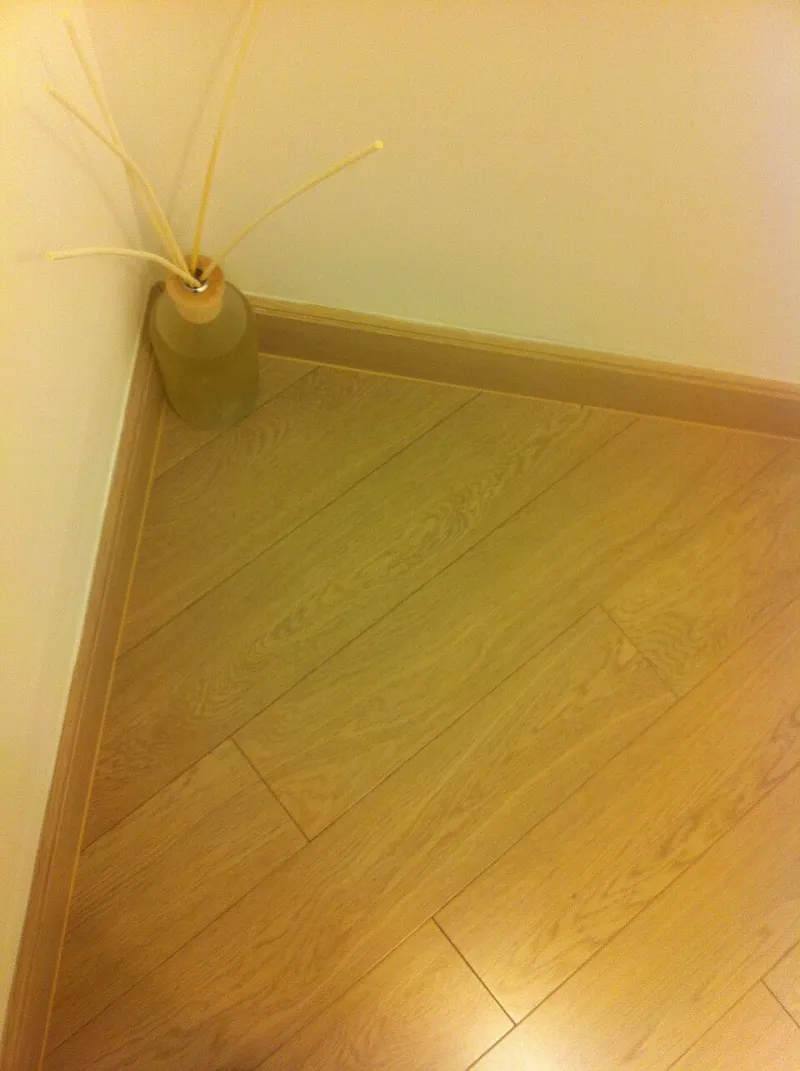
Photo: underlay roll and tools laid out on wooden floorboards during flooring installation, via ark.wiki.gg
Underlay is the cheapest line on most flooring quotes. It is also the line nobody inspects, because by the time you notice it, it is under a floor and gone forever. That combination — cheap and invisible — is exactly why it gets downgraded when a quote comes in over budget. And it is why so many floors that looked fine in the showroom feel hollow, drummy or tired three winters later.
We fit floors across a lot of different housing stock, and the honest truth is that there is no such thing as a good underlay. There is only an underlay that is right for the floor it is going on.
UK homes are not one site, they are five
A Victorian terrace with suspended timber boards, a 1930s semi with a mix of boards and chipboard, a 1970s estate house on a concrete slab, a new-build with screed and underfloor heating, a flat where impact noise is somebody else's problem — these all want different things from the layer underneath.
Suspended timber floors flex. They also sit above cold, occasionally damp air, and they can carry a surprising amount of airborne sound between rooms. A concrete slab on the ground floor brings moisture to the party, and no underlay on earth will fix a slab that is still giving off water. Upstairs rooms are usually about sound, not comfort. Kitchens are about firmness and moisture. Hallways are about grit and point loads.
Specify for the room, not for the roll that happens to be on the van.
Where the cheap foam gives up
Thin polyurethane foam — the blue or white stuff sold at pocket-money prices per square metre — fails in four recognisable ways.
It crushes. Foam compresses under point loads: sofa legs, a piano, a washing machine that walks itself across the utility room, the spot where everyone stands at the kitchen counter. It does not spring back. Eighteen months in, the heavy furniture sits in shallow craters and the traffic lanes feel flat and dead underfoot.
It does almost nothing acoustically. A few millimetres of open-cell foam will take the edge off a footstep, but if you are in a flat or a conversion and someone has mentioned Part E, a foam roll is not a sound insulation strategy. Impact sound needs mass and resilience — rubber crumb or a tested acoustic system with a documented figure, not a vague claim on the packaging.
It traps moisture. Laid straight onto a concrete slab with no damp-proof membrane, foam becomes a sponge against a cold surface. The floor above it starts to smell musty, laminate edges swell, and everyone blames the flooring.
It can be too thick and too soft for the floor above it. Click-together LVT and laminate both rely on the joints staying tight. Put them on 10mm of squashy foam and the joints flex every time somebody walks across them. They click apart, or they crack along the tongue.
The materials, sorted by the job
Rubber crumb (6–10mm). The default for upstairs rooms, flats and anywhere impact noise matters. It is firm, it resists compression, and it is heavy enough to be worth having. Check the manufacturer's position on underfloor heating, as some crumb products are fine and some are not.
Wood fibre board (5–7mm). Excellent over suspended timber, where it spreads load across the boards and takes out minor undulations. It plays nicely with underfloor heating and it feels solid underfoot. It is not a damp-proof membrane, so do not pretend it is.
Foil-backed foam combinations. The sensible budget choice for ground-floor slabs, provided the foil face is genuinely acting as a vapour barrier and the joints are taped. The foil does the moisture work; the foam is just cushioning.
Cork. Decent acoustics, natural material, fine over heating, and it works well under engineered wood. It costs more and quality varies, so buy from someone who will tell you the density.
Low-profile acoustic systems (3–5mm). The spec-driven option for flats and conversions, where you cannot afford to raise the floor level by much. Insist on the test data and keep the certificate with the job file — it is the sort of thing that gets asked for later.
The false economies worth calling out
- Spending £45 a square metre on engineered oak and putting £2 foam under it. The floor is only as good as the layer it sits on.
- Skipping the damp-proof membrane on a ground-floor slab and hoping. It is a tenner a roll and it is the difference between a floor and a problem.
- Buying anything labelled 'acoustic' without a number attached. Ask what it achieves, not what it is called.
- Reusing the old underlay because it 'looks alright'. It has already done its years.
- Assuming underlay levels a floor. It does not. A hump or a dip needs levelling compound or a bit of carpentry, not a thicker roll. Most click LVT wants the subfloor flat to around 3mm over a 2m straightedge, and no amount of foam changes that.
- Forgetting the tape. Untaped foil joints are an open door for moisture.
A room-by-room spec sheet for 2026
Upstairs bedrooms and landing. Rubber crumb or fibre board, 6–8mm. Avoid thick soft foam under click products. If the room sits above a neighbour, get an acoustic product with real figures.
Living room over suspended timber. Wood fibre board, joints staggered, boards screwed down and any squeaks sorted first. Vapour check if the void below is cold and ventilated.
Ground-floor living room on slab. Damp-proof membrane, lapped and taped, then foil-backed foam or a thin rubber. Test the slab for moisture before anything goes down.
Kitchen. Firm and thin. A dense rubber or a low-profile combination underlay that tolerates the odd spill. Keep it out of the appliance bays where water can pool.
Hallway. Low profile, firm, and resistant to grit. Remember the door thresholds — too much build-up and the front door stops closing.
Bathroom or wet room. Different conversation entirely. Backer board and tanking, not a foam roll.
Anywhere with underfloor heating. Check the tog rating and the manufacturer's wording. Thick soft underlay is a blanket over your heating and you will feel it in the bills.
What to ask before you sign
Ask what underlay is included and why that one. Ask whether a damp-proof membrane is in the price. Ask what the floor's flatness tolerance is and who is checking it. Ask for the acoustic figure if noise is the reason you are buying. If the answers are vague, the underlay is where the quote was trimmed.
It is the cheapest part of the job and the one you will never see again. Spend twenty minutes on it and you will feel the difference for a decade.